Running Out of Darkness: A Night Race in Daylight
At nearly 70 degrees north, the Midnight Sun Marathon starts at 8:30pm and finishes after midnight in full daylight. Its winter counterpart, the Polar Night Marathon, runs the same streets in darkness five months later.
MarathonPassport · June 2026 · 9 min read
At some point well past midnight on the Tromsø Bridge, something happens that your body cannot quite process. Your legs know it is late. Your watch confirms it. But the light coming off the fjord below is the colour of late afternoon, the kind of warm, horizontal gold that in any other country would mean you had an hour before the world went dark. Except here, at nearly 70 degrees north, the world does not go dark. It has not been dark for weeks. The sun is still above Tromsdalstinden, and you are still running, and the Arctic Cathedral is still reflecting the sky back at you from the far shore. You begin to understand that you have left ordinary time behind entirely.
The Midnight Sun Marathon starts at 8:30 PM on a Saturday in June. Most participants cross the finish line after midnight. The 2026 edition, on 20 June, carries additional significance: the Norwegian Marathon Championship is incorporated into the event for the first time. Bib collection is at the Port Terminal in central Tromsø on race day, between 10:00 AM and 9:00 PM.
A Race That Resists Easy Comparison
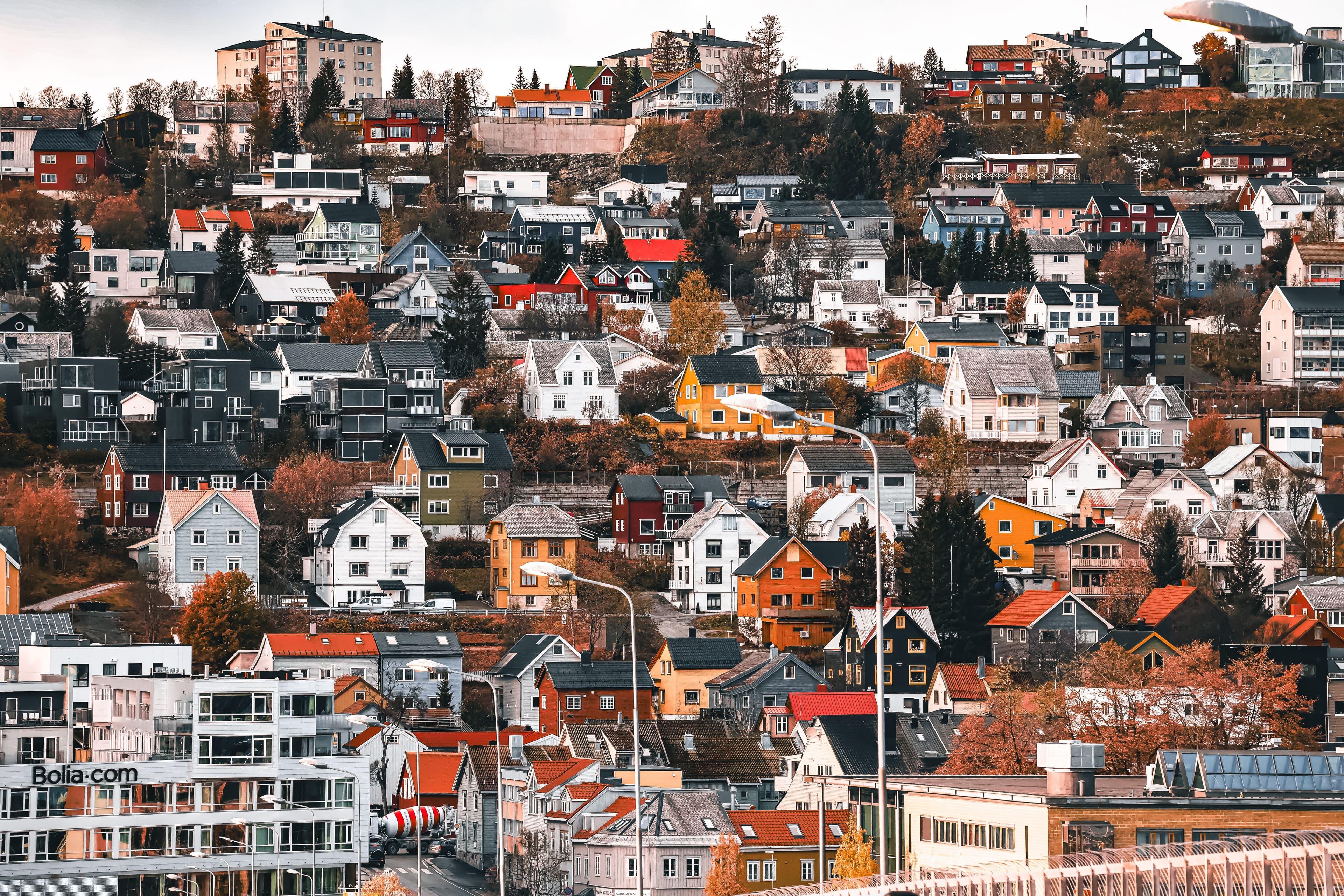
Tromsø sits approximately 350 kilometres north of the Arctic Circle, on an island of around 80,000 people that considers itself the Paris of the North, a description locals deploy with a confidence that takes a few days to verify. The race has been running since 1990 and, across all distances, drew nearly 9,000 runners from 88 countries in 2025, a participation record. The marathon itself had 1,537 finishers that year. These are not London or Berlin numbers. The scale is closer to a large regional race than a global major, which is entirely the point.
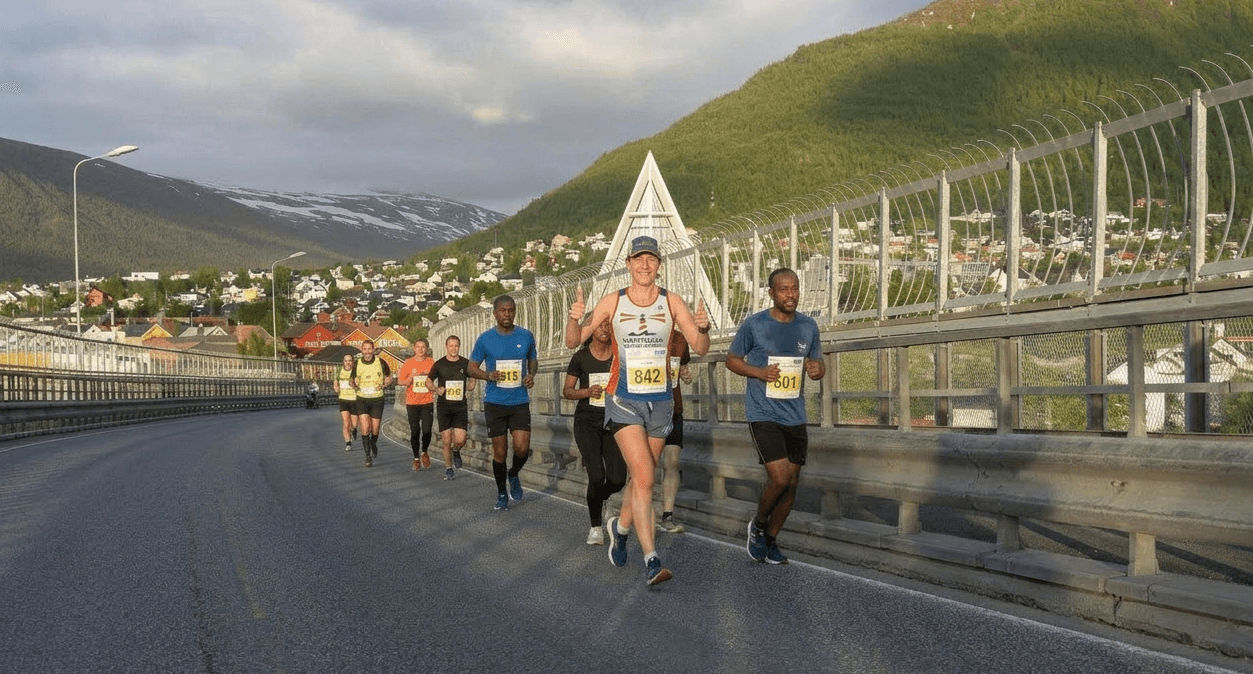
The course starts and finishes in the city centre. After around 2 kilometres, runners cross the Tromsø Bridge, which climbs from 6 metres to 43 metres above sea level. At the top, the world opens: the fjord below, the mainland mountains beyond, and the distinctive triangular facade of the Arctic Cathedral directly ahead on the far shore. The bridge is recrossed at approximately the 20-kilometre mark, and the second half of the course runs back through the city and along the coastline, largely flat, which gives tired legs something to be grateful for. The time limit is 5 hours 30 minutes.
This is not a personal-best course for most runners. The bridge climbs twice, the fjord sends a headwind along any stretch of road facing west, and the 8:30 PM start means that whatever you ate for dinner is now your race nutrition strategy. A runner who has trained well and wants a decent time is unlikely to be disappointed. A runner who has come specifically to run fast on an optimal course has misunderstood the proposition. The race rewards curiosity more than ambition, and the field reflects this: international, unhurried, and largely composed of people who have come as much for Tromsø as for the distance.
Worth stating plainly: Norway is expensive, and the entry fee does not include a finisher t-shirt. Anyone budgeting as they might for a European city marathon weekend will need to revise upward.
What June Does to Tromsø
The midnight sun period runs from late May to late July in Tromsø, and the race in mid-June falls well inside that window. Temperatures on race evening typically sit between 10°C and 14°C at sea level, with the fjord moderating anything extreme. In 2025, the high on race day was 10°C; in 2023 it reached 22°C, which runners who were there describe as an uncomfortable anomaly. The sensible packing assumption is layers rather than sunscreen, though at this latitude in June, UV exposure is genuine even when the air temperature says otherwise. A light wind shell is worth bringing. So are sunglasses, which are not an affectation at midnight but a practical response to direct sun at a low angle off the water.
There is no rail connection to Tromsø. Flying is the only realistic option for most international runners, with direct services from Oslo, Stockholm, Copenhagen, and Helsinki. Oslo is the main hub for long-haul connections, adding a stop for anyone arriving from outside Northern Europe. Hotels near the start and finish fill quickly once entries open; central Tromsø, within walking distance of Storgata, the finish street, is the most practical base for pre- and post-race logistics. A sleep mask is not optional. The midnight sun is not metaphorical, and the hotel room will be bright at 2 AM regardless of what the curtains claim.
The city itself does not behave normally on race weekend. Because the light does not signal bedtime, Tromsø simply continues. Restaurants serve. Bars fill. People sit outside. The race passes through a city that is fully, peculiarly awake at midnight, and this gives the event an intimacy that large city marathons with their crowd infrastructure rarely achieve: the spectators are there because they want to be, not because a cordon has been set up on the only convenient section of pavement.
The Light at Midnight
What changes around midnight on the course is not the fact of the sun but its quality. The light tilts. It softens. The shadows extend in every direction at once, which is physically impossible by any intuition trained at lower latitudes. The sky holds a shade of amber and rose that sits outside the normal vocabulary for colours associated with either day or night. The snowfields remaining on the mountains above Tromsdalen look less like snow in conditions like these and more like something applied deliberately to make the scene look implausible.
Runners who are on the bridge around midnight frequently describe the experience in terms that are more perceptual than athletic. One thing worth knowing before arrival: cloud cover is the norm rather than the exception, and a MarathonGuide review from a previous edition notes the race director’s admission that in all his years of directing the event, he had only once actually seen the midnight sun during the race. Clear conditions are not guaranteed. The light phenomenon is always present, since the sun is above the horizon regardless, but what the sky does with it varies considerably between editions. Cloudy conditions produce their own version of high-latitude June light, which is nothing like a normal overcast day, and a runner who arrives expecting a specific postcard and encounters low cloud will have missed the actual experience by looking for the wrong one.
After the Finish Line
When you collect your medal at midnight in a city where everything is still open and the sky still looks like early evening, the usual post-race logic needs some recalibration. The waterfront area along Storgata is where most finishers end up: sitting, eating, doing the mild cognitive work of accepting that they have just run a marathon and the world is behaving as though it is 7 PM.
The Fjellheisen cable car, departing from Solliveien, covers the 421 metres to the top of Mount Storsteinen in four minutes. For post-marathon legs, this matters specifically because it delivers a panoramic view over the island, the bridges, and the surrounding fjords without requiring the knees to climb anything. The cable car operates with extended hours during the summer season; the view from the top at 1 AM in June is the kind of thing that is difficult to explain to people who have not experienced high-latitude light.
It is a ten-minute walk from the finish to the Arctic Cathedral, formally Tromsdalen Church, and it earns more time than most visitors give it. The interior mosaic glass responds to the angle of the light in ways that shift substantially across the day, and in midnight sun conditions it does things that its 1965 architect, Jan Inge Hovig, could only have theorised about.
For runners who recover enough leg function by day two or three, the island of Sommarøy lies approximately 77 kilometres west of Tromsø by road. The water around the island is a colour that reads as tropical in photographs and remains implausible when you are actually standing beside it. The beaches are real. The water is genuinely that colour. The light on a clear June day makes the whole place look like a filing error in the atlas.
The Winter Counterpart
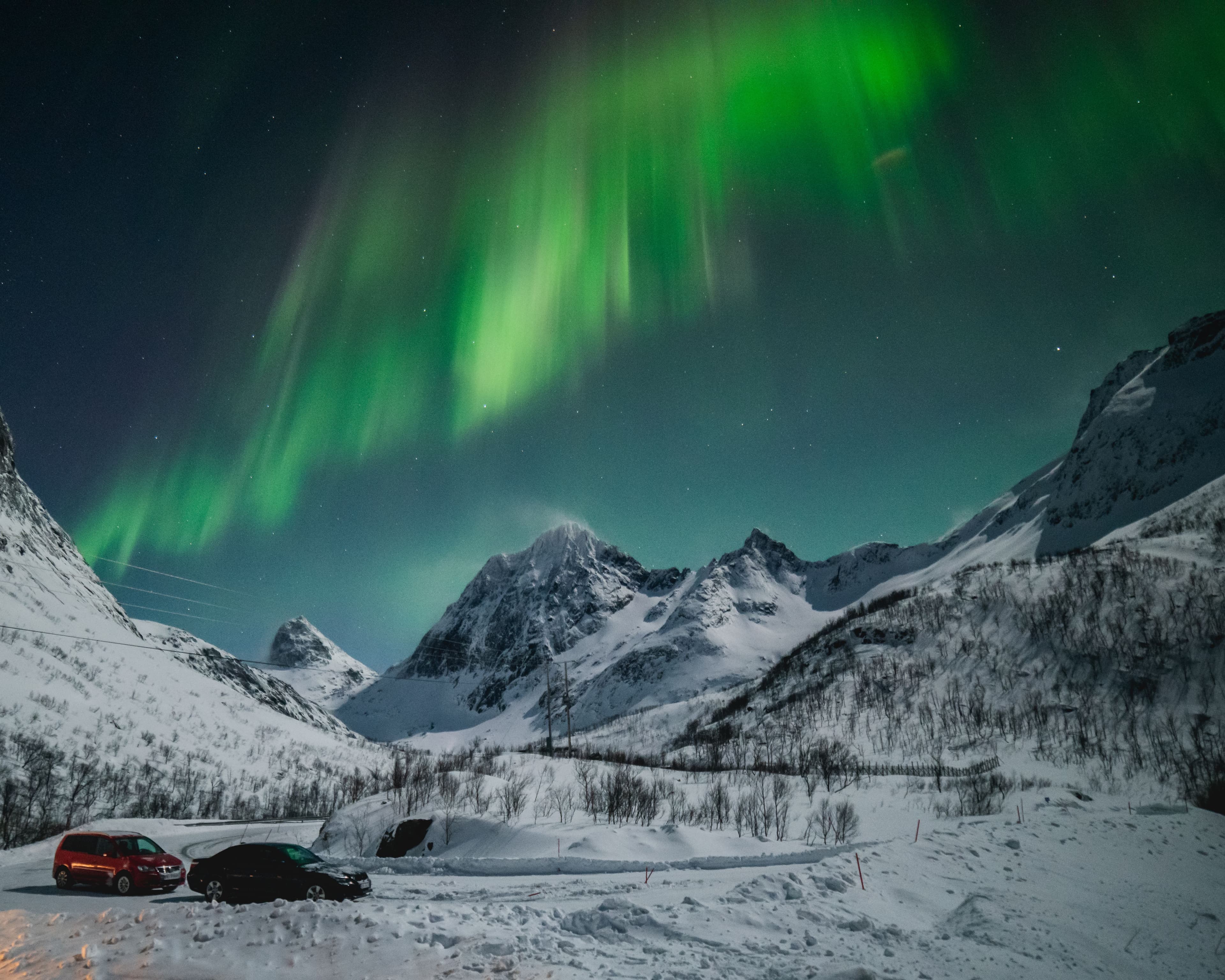
The same organisation behind the summer race runs the Polar Night Marathon in January, when the sun does not clear the horizon at all. The aesthetic reversal is total: blue-hour light, frozen streets, the possibility but not the guarantee of northern lights overhead. The organiser describes it as Norway’s biggest winter race, though the marathon distance itself stays small and deliberate — fewer than 200 runners finished the full distance in 2026, a fraction of the nearly 2,400 who took on one of the shorter Mørketidsmila or Mørketidstrimen distances the same weekend. A certain kind of runner will find that having done one, the other becomes a reasonable ambition. Most people who complete the Midnight Sun Marathon eventually find themselves thinking seriously about going back in January, which is either a testament to Tromsø’s appeal or a warning about what destination races do to otherwise sensible people.
Plan the Trip
Registration opens annually at msm.no. The 2026 edition is Saturday 20 June, starting at 8:30 PM, with bib collection at the Port Terminal from 10:00 AM. Course profile, entry process, and start/finish logistics on MarathonPassport.
Race guide→The winter counterpart, run on the same streets under the Ishavskraft Marathon name. Next edition 9 January 2027. Four distances on the day, from a 5km Mørketidstrimen to the full marathon.
Race guide→fjellheisen.no. Four minutes to 421 metres above Tromsøya, with extended summer hours. The most practical post-marathon option for legs that object to any further self-inflicted elevation.
fjellheisen.no→visitnorway.com. The regional tourism resource for boat trips, Sommarøy excursions, midnight sun and northern lights experiences, and understanding what the city offers beyond the race course itself.
visitnorway.com→