The finish line of a major marathon used to be the end of something. Now, increasingly, it is the beginning. Runners who cross it collect a medal, check a city off a list, and open a website to look at what comes next. The World Marathon Majors turned six standalone prestige races into a circuit worth completing. The European Marathon Classics formalised eight of the continent's most established marathons into a single challenge. The Superhalfs linked six of Europe's fastest half marathons into a series with its own passport, its own medal, and its own Hall of Fame. In a five-kilometre radius of central Bologna, five Italian cities are competing for your attention across a regional circuit that has until April 2030 to collect its finishers.
The series mechanic is not complicated. Complete a defined set of races, earn a special medal you cannot get any other way. What is interesting is how quickly it has reshaped the way runners plan their years.
The Short Cut
- There are currently four major running series with organised completion mechanics: the Abbott World Marathon Majors (eight races), the European Marathon Classics (eight races, five required), the SuperHalfs (six half marathons, all six required), and the HypER 5 (five marathons in Emilia-Romagna).
- The World Marathon Majors is the oldest and most globally recognised. Completing all eight is a multi-year project costing tens of thousands of pounds in race fees, flights, and hotels; ballot entry for Tokyo and London make the timeline unpredictable.
- The European Marathon Classics launched in February 2026 and requires completion of five of its eight races. Registration for the series itself is free; standard race entry fees apply. Historical results from past editions count toward completion.
- The SuperHalfs connects six European half marathons (Lisbon, Prague, Berlin, Copenhagen, Cardiff, and Valencia) and requires all six for the SuperMedal. The 2025-2026 series entry sold out.
- The HypER 5 is the most regional of the four: five marathons across the Italian cities of Bologna, Parma, Ravenna, Reggio Emilia, and Rimini, with a digital passport mechanic and a four-year completion window from October 2025.
- Several races appear in more than one series simultaneously: Berlin and Copenhagen appear in both the European Marathon Classics and the SuperHalfs; London appears in both the WMM and the EMC.
What is the Abbott World Marathon Majors?
The World Marathon Majors is the oldest and most recognised running series in the world. It began in 2006 with five races, Boston, London, Berlin, Chicago, and New York, and has grown to eight. Tokyo joined in 2013. Sydney became the seventh Major in August 2025. Cape Town was confirmed as the eighth on 10 June 2026, with its first full Major edition scheduled for May 2027.
The eight races, in calendar order, are:
| Race | Typical month | Entry type | Field size (approx.) |
|---|---|---|---|
| Tokyo Marathon | March | Public lottery + time qualifier | 38,000 |
| Boston Marathon | April | Qualifying time required | 29,000 |
| TCS London Marathon | April | Public ballot + charity/GFA | 56,000–60,000 |
| BMW Berlin Marathon | September | Public ballot + time qualifier | 48,000–54,000 |
| Bank of America Chicago Marathon | October | Public ballot + time qualifier | 54,000 |
| TCS New York City Marathon | November | Public draw + NYRR 9+1 | 55,000–60,000 |
| Sydney Marathon | September | Public ballot + time qualifier | 33,000 |
| Cape Town Marathon | May | Public ballot (from 2027) | 27,000 |
There is no official completion certificate or dedicated series medal in the way the EMC or SuperHalfs operate. The Abbott World Marathon Majors Six Star Medal (awarded for completing the original six) has become one of the most recognised achievements in recreational running, worn by approximately 10,000 runners globally as of early 2026. With Sydney and Cape Town now added, the full eight-race collection is not yet formalised under a single title; the series is working through how to acknowledge completion of all eight.
How do I enter the World Marathon Majors?
Entry mechanisms differ significantly between races. Boston requires a qualifying time, verified within a specific window before registration opens. The time varies by age group and sex; in practice, demand has pushed effective qualifying times several minutes faster than the published standards. London, Berlin, Chicago, New York, Sydney, and Cape Town all run public ballots; Tokyo runs a public lottery with a separate time-qualifier pathway. Acceptance rates for the most oversubscribed races, Tokyo and London, are among the lowest of any mass-participation event in sport. London received more than 840,000 applicants for one recent race cycle.
For a full breakdown of entry routes for each Major, including Good For Age standards, charity places, and international entry options, see the individual race pages on MarathonPassport.
How long does it take to complete the World Marathon Majors?
There is no time limit. Runners have completed the Six Star collection across decades; the average is several years for most, constrained by ballot success rather than ambition. Completing all eight in a single calendar year is theoretically possible (Tokyo in March, Boston in April, London in April, Berlin in September, Chicago in October, New York in November, Sydney in September, Cape Town in May, though London and Sydney fall in the same month with two weeks between them, and Boston and London are one week apart) but would require guaranteed entry in every race simultaneously, which the ballot system makes effectively impossible for most runners.
What is the European Marathon Classics?
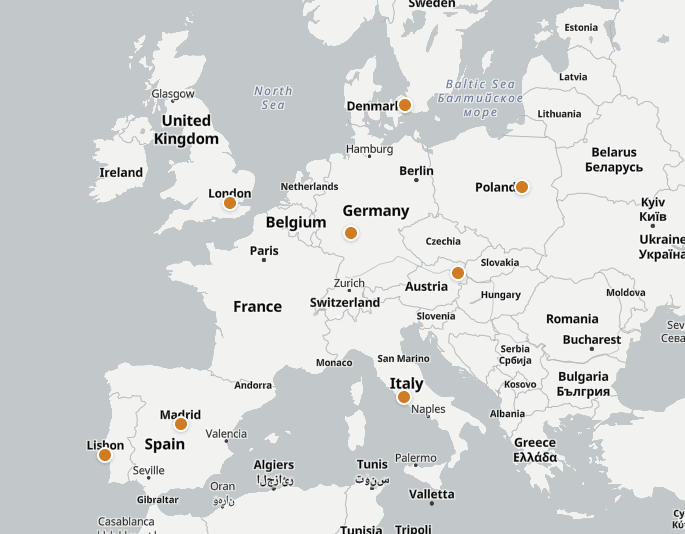
The European Marathon Classics was announced on 25 February 2026 at the Schönbrunn Palace in Vienna. Eight of Europe's most established marathons joined the series at launch:
| Race | Month | Country |
|---|---|---|
| Acea Run Rome The Marathon | March | Italy |
| Vienna City Marathon | April | Austria |
| TCS London Marathon | April | United Kingdom |
| Zurich Rock 'n' Roll Running Series Madrid | April | Spain |
| Copenhagen Marathon | May | Denmark |
| Warsaw Marathon | September | Poland |
| EDP Maratona de Lisboa | October | Portugal |
| Mainova Frankfurt Marathon | October | Germany |
To earn the European Marathon Classics Finisher title and its associated medal, runners must complete five of the eight races. The order does not matter. There is no time limit imposed by the series itself, though individual races must be entered and completed under their own entry rules.
Registration for the series is free. Entry fees for individual races still apply under each race's standard pricing and entry mechanism. London requires ballot or qualifying entry as usual; the series does not bypass individual race entry systems.
A distinctive aspect of the EMC is its historical recognition policy. Through a planned partnership with LetsDoThis.com, expected to launch in the second half of 2026, runners will be able to add verified past results to their EMC profile. Madrid's first edition ran in 1978; Frankfurt's in 1981; Warsaw's in 1979. A runner who completed Frankfurt in 2019, London in 2021, and Rome in 2023 may be closer to an EMC Finisher title than they realise.
How does the European Marathon Classics compare to the World Marathon Majors?
The two series are complementary more than competitive. The WMM includes London and Berlin from Europe; the EMC includes London but not Berlin. A runner collecting both would be working toward very different race calendars.
The key structural differences:
| World Marathon Majors | European Marathon Classics | |
|---|---|---|
| Number of races | 8 | 8 |
| Required for completion | All 8 (Six Star = original 6) | 5 of 8 |
| Series registration cost | Free | Free |
| Geographic scope | Global | Europe only |
| Historical results count | No | Yes (from late 2026) |
| Time limit | None | None (series-level) |
| Entry difficulty | Ballot/qualifier for most | Varies; some open entry |
The EMC has a meaningfully lower barrier to completion than the full WMM. Five races from a field of eight, with historical results counting, means some runners are already halfway there without having signed up. The ballot pressure at London and Copenhagen creates friction, but Rome, Vienna, Madrid, Warsaw, Lisbon, and Frankfurt are all reachable through standard open or ballot entry without the years-long wait that characterises Tokyo and London WMM entry.
What is the SuperHalfs?
The SuperHalfs connects six European half marathons under a shared completion challenge. The races are:
| Race | Month |
|---|---|
| Lisbon Half Marathon | March |
| Prague Half Marathon | March |
| Berlin Half Marathon | March |
| Copenhagen Half Marathon | September |
| Cardiff Half Marathon | October |
| Valencia Half Marathon | October |
To earn the SuperMedal, runners must complete all six. The medal is presented at the finish line of the final race. There is no time limit imposed by the series. From February 2025, the series removed its previous time restriction entirely.
Series registration requires a SuperPassport number, which must be entered on each race registration. Joining the series is separate from entering individual races. The 2025-2026 charity series entry sold out; individual race entries operate through each race's standard system.
Berlin joined the SuperHalfs in 2024, taking the series from five to six races. Runners who registered before Berlin joined can still earn the medal by completing the original five. The series has stated it may add further races.
All six SuperHalfs races carry World Athletics label status. Copenhagen, Cardiff, and Valencia have hosted the IAAF World Half Marathon Championships. Copenhagen will host the 2026 World Athletics Road Running Championships.
Is the SuperHalfs sold out?
The series charity entry package for 2025-2026 sold out. Individual race entries for each SuperHalfs event operate through those races' own entry systems and have their own availability. Several official tour operators hold guaranteed entry packages for the full series. Cardiff and Valencia typically remain open when Lisbon, Prague, Berlin, and Copenhagen close.
How does the SuperHalfs compare to the European Marathon Classics?
They are different distances and different structures. The SuperHalfs is half marathon only; the EMC is marathon only. The SuperHalfs requires all six races for its medal; the EMC requires five of eight. The SuperHalfs has a more established identity and infrastructure (official tour operators, a charity entry pathway, a Hall of Fame) given its longer history. The EMC is larger in geographic spread and includes races in cities, Rome and Warsaw, not covered by the SuperHalfs.
A runner doing both series would cover: Lisbon, Prague, Berlin, Copenhagen, Cardiff, and Valencia at 21.1km, plus Rome, Vienna, London, Madrid, Copenhagen, Warsaw, Lisbon, and Frankfurt at 42.195km. Lisbon and Copenhagen appear in both.
What is the HypER 5?
The HypER 5 is a regional Italian marathon circuit connecting five cities in the Emilia-Romagna region: Bologna, Parma, Ravenna, Reggio Emilia, and Rimini. Runners who complete all five marathons by April 2030 earn the HypER 5 medal, collected in person at a dedicated corner at each of the five races.
Results are tracked through a digital passport, a virtual stamp book that can be downloaded and shared after each completed race. The system logs results automatically within approximately ten working days of each event. Registration for the series is separate from race entry; past results from October 2025 onward count automatically once registered.
The HypER 5 is the most regional of the four series covered here. All five cities sit within a corridor of northern Italy. Runners already familiar with Italian marathon culture, Ravenna in particular has a dedicated following among international runners, will find this a natural extension of an existing travel habit. For others, it is a reason to spend four or five autumn weekends in a part of Italy that most marathon travel itineraries miss.
More information at maratonemiliaromagna.it/hyperfive.
Common questions about running series
What is the World Marathon Majors Six Star Medal?
The Six Star Medal is awarded to runners who complete all six original World Marathon Majors: Tokyo, Boston, London, Berlin, Chicago, and New York. There is no time limit. The medal is presented at the finish line of the runner's sixth Major. With Sydney and Cape Town now added to the series, the title and medal for completing all eight has not yet been formalised.
Can I count past race results toward the European Marathon Classics?
Yes. Through a partnership with LetsDoThis.com expected in late 2026, runners will be able to add verified historical results to their EMC profile, dating back to the inaugural editions of each member race.
Do I need to complete all six SuperHalfs races to get the medal?
Yes. The SuperMedal requires all six races: Lisbon, Prague, Berlin, Copenhagen, Cardiff, and Valencia. There is no partial completion medal.
Which series is easiest to complete?
The European Marathon Classics requires the fewest races relative to its total (five of eight), historical results count, and several member races have open or accessible ballot entry. For runners already with a handful of European marathons in their history, it may be the quickest to complete. The HypER 5 is geographically concentrated and has a 2030 deadline, making it achievable in four to five autumn weekends for runners willing to travel to northern Italy.
Are any races in more than one series?
Yes. London appears in both the World Marathon Majors and the European Marathon Classics. Copenhagen appears in both the European Marathon Classics and the SuperHalfs. Lisbon appears in both the SuperHalfs and the European Marathon Classics.
Is there a series for marathons outside Europe?
The World Marathon Majors spans four continents (Tokyo, Sydney, Cape Town, Boston, and five European and North American races). Beyond the WMM, most organised series are regional. The HypER 5 is Italy-only. No equivalent to the WMM or EMC exists for Asia, South America, or Africa at this time.
How much does it cost to join a running series?
Series registration is free for the WMM, EMC, SuperHalfs, and HypER 5. Race entry fees, travel, and accommodation are the costs. A complete WMM collection, eight races across four continents, with flights and hotels, would cost most runners £15,000–30,000 over the collection period, depending on entry route, accommodation choices, and whether charity or tour operator packages are used.
The Extra Mile
European Marathon Classics. Official series website with registration, race calendar, and results recognition information.
SuperHalfs. Official series website with SuperPassport registration, race links, and Hall of Fame.
HypER 5. Official series page for the Emilia-Romagna circuit, including digital passport login.
Abbott World Marathon Majors. Official series information including Six Star registration and athlete services.
For race pages, ballot dates, hotel recommendations, and post-race itineraries for every race mentioned in this article, see the MarathonPassport race index.