The Short Cut
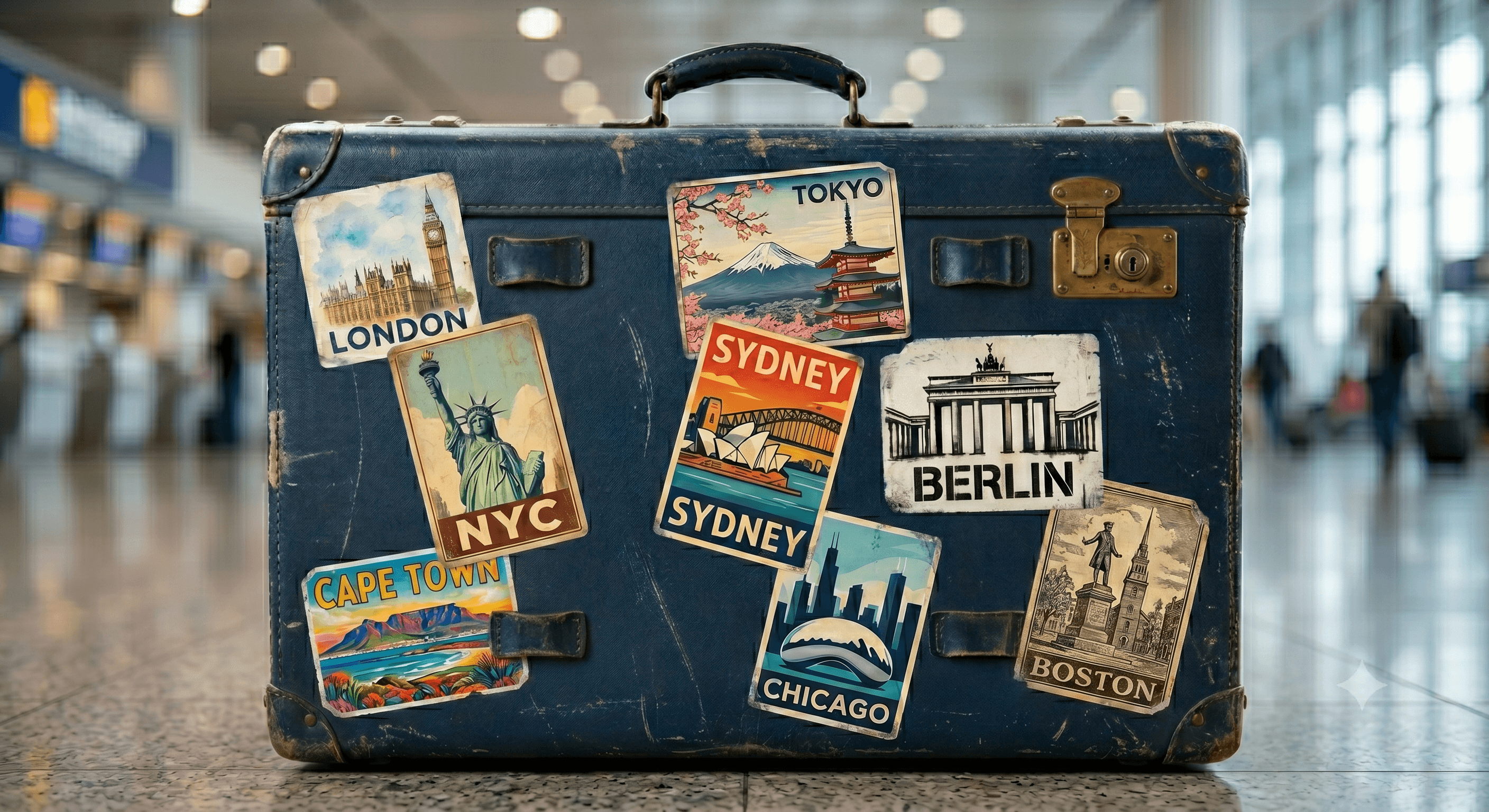
- Eight Majors, eight very different travel experiences. The history and prestige are well documented. What matters for trip planning is neighbourhood, logistics, season, and how the city treats the race.
- Tokyo: the most precisely organised Major in the world. Book accommodation a year ahead.
- Boston: requires qualification, not luck. The course is deceptive: the first half is net downhill, and the Newton Hills will punish anyone who runs it fast.
- London: nearly 60,000 finishers, and the post-race area is large. Have a meeting plan that uses a named landmark.
- Berlin: the world's fastest course. Every men's world record since 2013 has been set here.
- Chicago: flat, festive, and logistically excellent. The best entry odds of the American three.
- New York: the most theatrical production in marathon running. The Staten Island start is remote. Plan the wait.
- Sydney: the Harbour Bridge. Ballot odds around 33%, the most accessible of the eight.
- Cape Town: confirmed as the eighth Major in June 2026. Africa's first. Table Mountain, ocean views, and May conditions that suit fast running.
Tokyo — Early March
Tokyo is the hardest Major to enter and the most precisely organised race in the world. The course runs from Tokyo Metropolitan Government Building in Shinjuku through the heart of the city, past the Imperial Palace, through Asakusa and Hibiya, with the finish near the starting point. The route is flat, fast, and almost entirely lined with spectators. Crowd density on the Tokyo course is among the highest of any Major.
For travelling runners, the logistics are meticulous. Bag drop, water stations, and medical support operate with a precision that catches many Western runners off-guard in the best possible way. Start pen organisation is strict. Arrive at your pen late and you will be moved to a later wave.
Where to stay: Shinjuku puts you close to the start, Marunouchi close to the finish. The race weekend coincides with early cherry blossom season in some years, which makes the city extraordinary in the days around the race. Book accommodation a year ahead: Tokyo fills up fast for marathon weekend.
The cutoff is 7 hours 10 minutes from the gun. The course closes in stages.
Boston — Third Monday in April
Boston is the outlier. It requires qualification rather than luck, the course runs point-to-point from Hopkinton to Boylston Street in a direction that makes spectating from one location difficult, and the atmosphere is unlike any other Major: part civic celebration, part competitive proving ground.
The Hopkinton start is in a small town about 26 miles west of Boston. Runners are bussed there hours before the start and spend time in the Athletes' Village in a field. The wait is long. Dress for it with throwaway layers. Hopkinton in April is frequently cold with wind.
The course is iconic and deceptive. The first half is net downhill, which encourages runners to go out fast; the Newton Hills around kilometres 26 to 35 punish that decision comprehensively. Heartbreak Hill is the most famous climb but not the hardest. Knowing the course and running the first half conservatively is the single biggest tactical insight for Boston.
Boylston Street is one of the great finishing stretches in marathon running. Stay in Back Bay: it puts you within walking distance of the finish and in the centre of marathon weekend life.
London — Late April
London has the biggest field of the eight Majors, nearly 60,000 finishers in 2025, and the most concentrated spectatorship of any city race in the world. The course runs from Greenwich Park to The Mall, passing Tower Bridge at roughly the halfway point.
The start in Greenwich means most runners travel south by overground rail on race morning, which is a long and sometimes crowded journey. Allow more time than you think you need. Hotels in Greenwich or the City work well for minimising morning logistics.
The finish on The Mall is as good as it gets, one of sport's great settings, but the post-race area is large and takes time to navigate. Have a plan for meeting anyone at a named landmark rather than a vague "near the finish."
Weather is highly variable. The 2025 race ran in exceptional heat that affected times significantly. April in London can produce anything from cold and grey to unseasonably warm.
Berlin — Late September
Berlin is the world's fastest marathon course. Every men's world record since 2013 has been set here. The flat, long-straight, minimal-turning route through the Brandenburg Gate in the heart of the city is specifically engineered for speed, and the September weather window delivers reliably cool conditions more often than any other Major.
The atmosphere is festive and well-organised. The finish through the Brandenburg Gate is historic rather than spectacular, but the course through central Berlin, past the Reichstag, along Unter den Linden, through the former East, gives the race a distinct character.
Where to stay: Mitte or Prenzlauer Berg are both well-positioned. Berlin accommodates marathon weekend without the congestion that affects some other Major cities.
Entry: the ballot has 20 to 30% acceptance odds, genuinely among the most generous of the legacy five. Enter in October for the following year's race. The time-qualifier standard (sub-2:45 for men, sub-3:00 for women, age-adjusted) provides guaranteed entry for faster runners.
Chicago — Second Sunday in October
Chicago is fast, flat, logistically excellent, and conducted at a scale that is genuinely staggering: over 54,000 finishers in 2025. The out-and-back course through 29 of Chicago's neighbourhoods means crowd support is dense and well-distributed, with Grant Park at the start and finish providing one of the most festive pre-race atmospheres on the circuit.
October in Chicago is typically excellent marathon weather: cool, clear, minimal wind. The city is easy to navigate, well set up for runners, and the race weekend has a celebratory energy that differs from London's more intense atmosphere.
For touring runners who want a highly organised, accessible Major and a good base for wider US exploration, Chicago is the easiest of the American three to plan around.
New York City — First Sunday in November
New York is the Majors' most theatrical production. The course connects all five boroughs via a route that starts with the Verrazano Bridge in Staten Island and finishes in Central Park, with the highlight being the approach into Manhattan from Queens over the Queensboro Bridge around kilometre 26, one of the great race moments anywhere.
The Staten Island start is remote. Runners are bussed from Midtown early in the morning and spend hours at Fort Wadsworth in a holding area with varying conditions depending on the weather. November in New York can be cold and wet. The throwaway layer is essential. Have a plan for the wait.
Post-race in Central Park involves significant distance between the finish and the exit. After 26.2 miles, the walk-out feels longer than it should. Have warm clothes in your bag drop, book accommodation south of the park, and have a food plan ready.
The ballot odds are brutal: 1% for the general lottery. But the 9+1 pathway, nine qualifying NYRR races plus one volunteer shift, provides a reliable route in for committed runners.
Sydney — Last Sunday in August
Sydney joined the Majors in 2025 and brings something the others cannot match: the Harbour Bridge. Running across it with the Opera House visible below is one of the great singular moments in world marathon running, and the course through the northern suburbs and back into the city rewards runners with views that no European or American Major can replicate.
August in Sydney is late winter: cool, clear, ideal marathon conditions. The race is early in the Australian morning, finished before the city gets warm.
Sydney has ballot acceptance rates around 33%, making it the most accessible of the original eight by lottery odds. Note that Sydney, like Cape Town, counts toward the new Nine Star medal rather than the Six Star medal, which remains exclusive to the original six Majors: Tokyo, Boston, London, Berlin, Chicago, and New York.
Cape Town — Late May
Cape Town was confirmed as the eighth Abbott World Marathon Major in June 2026, becoming Africa's first Major after passing the final stage of its three-year candidacy process. Eliud Kipchoge ran the 2026 race, choosing Cape Town for his first official marathon on African soil.
The course starts and finishes outside Cape Town Stadium in Green Point, routing through the city in the shadow of Table Mountain before dropping to the southern suburbs and looping back along the seafront. The combination of mountain backdrop, ocean views, and a flat, fast road surface gives the race a visual and physical profile unlike anything else on the circuit.
Late May in Cape Town is early autumn in the southern hemisphere: cool, dry, and reliably calm. Conditions sit naturally in the range that produces fast times.
Two-thirds of race entries are reserved for African participants, which reflects the race's founding purpose and shapes the field atmosphere. For international runners, roughly one-third of places are available through the ballot or tour operator packages. The 2027 ballot opened on 10 June 2026. Entry demand will rise fast as the race's Major status settles in.
Cape Town counts toward the Nine Star medal alongside Sydney. The Six Star medal remains exclusive to the original six Majors.
Where to stay: the V&A Waterfront and De Waterkant are both within easy reach of the start and finish at Cape Town Stadium, and give access to the best of the city's post-race restaurants and cafés. The Green Point and Sea Point seafront promenade is walkable from both areas.
The Extra Mile
Entry strategy for all eight Majors is covered in How to Get Into the World Marathon Majors.
Full race guides, entry information, neighbourhood logistics, and hotel recommendations for all eight Majors: