The Race
| Distance | 42.195 km |
| Course Type | Road, point-to-point with loop sections, city streets |
| Start | Porto city centre |
| Finish | Ribeira waterfront, Porto (Praça do Infante area) |
| Registration | Open entry |
| Total Finishers | ~25,000 |
| Avg Race Day Temp | 10--16°C |
| Cutoff Time | 6 hours |
| Free Race Day Transport | Check official website edpportomarthon.com |
| Course Certification | AIMS / World Athletics certified |
The Porto Marathon (EDP Porto Marathon) runs in November through the city that gave its name to port wine, finishing on the Ribeira waterfront below the Luís I Bridge. The course uses the city's streets, the riverfront, and sections of the coastal road - a course that is partially flat (the river sections) and partially defined by Porto's characteristic vertical topography (the hillside districts). November conditions - typically 10--16°C, cool and often overcast - are generally good for running, though November is Porto's wettest month.
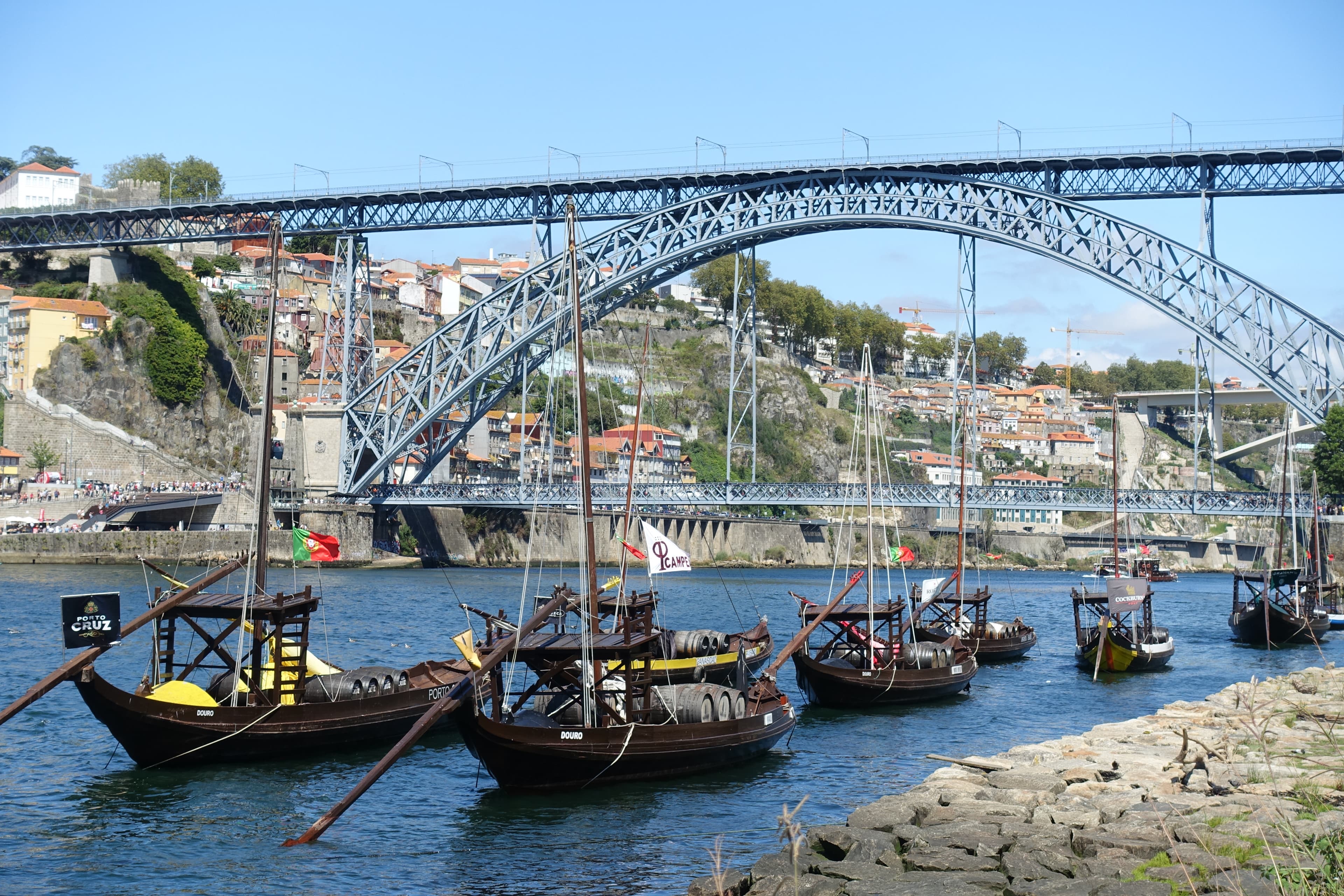
The finish on the Ribeira is the specific reason to run Porto. The UNESCO-listed waterfront, the Douro below, and the Dom Luís I Bridge overhead are the backdrop for the final kilometres; crossing the finish line here is one of the more memorable race finish experiences in European marathon running. Check edpportomarthon.com for the current race date, course map, and entry details.
Entry
| Registration Type | Open entry - no ballot |
| Registration | Via edpportomarthon.com |
| Entry Fee | Check official website for current pricing |
| GFA / Qualifying Entry | Check official website for current standards |
The Porto Marathon is open entry - no ballot, no lottery. Register directly at edpportomarthon.com when entries open. The race has grown considerably in recent years; entry typically opens several months before race day and places sell out as the date approaches. Do not leave registration late if the November date works for your schedule.
Check the official website for current Good for Age standards and any championship entry pathway. A dedicated EDP charity entry is also available for runners raising funds for supported organisations.
Race Weekend
Expo and Number Collection
The race expo and number collection typically takes place at Alfândega do Porto - the historic 14th-century customs house on the Douro waterfront, a few minutes' walk from the Ribeira. Expo hours are usually Friday and Saturday before race Sunday. Check the official website for current details; number collection must be completed before race morning.
Getting to the Start
Check edpportomarthon.com for the current start location and any race morning transport arrangements. Runners based in the Ribeira or Cedofeita are typically within walking distance of the start. The Metro (Line D from São Bento or Aliados to Campanhã, or direct from Campanhã) connects central Porto to the wider city; check current Metro timetables for race morning.
The Course
The Porto Marathon course uses the city streets, the Douro riverfront sections, and parts of the coastal road - a route that reflects Porto's geography with both flat riverside sections and sections that involve the city's characteristic hills. The full course map is published at the official website before race day; review it when planning your pacing strategy. November conditions are typically good for running when dry: cool air, low humidity, and overcast skies for much of the morning. Rain is a genuine possibility; plan accordingly.
The Finish
The finish is on the Ribeira waterfront in the area of Praça do Infante, below the Luís I Bridge. After crossing the line, São Bento station is five minutes' walk from the finish - Metro Line D to Campanhã for airport connections. Taxis and Uber operate in the Ribeira area. The Ribeira hotels are within walking distance of the finish.
Where to Stay
Stay near the finish on the Ribeira waterfront, not the start. The Ribeira district - the UNESCO-listed waterfront quarter directly on the finish line - and Cedofeita to the west are the most practical bases. Avoid the steep hillside districts for post-marathon accommodation: Porto's famous topography is as demanding on the walk back to the hotel as it is on the race course.
Book four to six months in advance. Porto has become one of Europe's most visited cities; November is a busy month for leisure travel and central hotels near the Ribeira fill for marathon weekend. Prices have risen considerably in recent years - book early to avoid peak rates.
Wine hotel on the hillside of Vila Nova de Gaia, directly above the port wine lodges and facing the Porto Ribeira across the river. The pool and terrace give the defining view of Porto. Requires a taxi or the Luís I Bridge lower level on foot to reach the finish area.
Boutique hotel in a converted 19th-century palace on a quiet Cedofeita street. Pool and garden, within flat walking distance of the Ribeira.
Townhouse hotel in the UNESCO-listed Ribeira quarter, a short walk from the finish on the Douro waterfront. The best-positioned mid-range option for race day.
Well-located hotel in the Ribeira district, close to the finish line and the Luís I Bridge. Good value for the position.
Award-winning design hostel in a 19th-century villa in the Cedofeita neighbourhood. Private rooms available. Best budget option with good access to the finish and the post-race excursion rail connections.
See & Do
The finish on the Ribeira puts you at the base of Porto's most concentrated area. The Douro is immediately in front; the port wine lodges of Vila Nova de Gaia are across the water; the Luís I Bridge is overhead. What follows covers the territory within reach of the Ribeira and Cedofeita on post-marathon legs, where flat is available and vertical is optional.
The Port Wine Lodges, Vila Nova de Gaia
The south bank of the Douro is Vila Nova de Gaia, where the major port wine lodges - Graham's, Taylor's, Ramos Pinto, Sandeman, Ferreira - store and age their wine in the long *armazéns* lining the hillside above the river. The Luís I Bridge lower level connects the Ribeira to Gaia at river height: a flat crossing with the view of both banks simultaneously. The Gaia bank at river level - the **Cais de Gaia** - is flat throughout and lined with lodge tasting rooms that offer cellar visits and wine tasting from morning. The lodges on the hillside above are reached by funicular or stairs; the river-level options are sufficient. In November, with the summer tourist crowds thinned, the lodge visits are quieter and more unhurried.
The Six Bridges Douro Cruise
Several operators run the Six Bridges river cruise from the Cais da Ribeira - an hour-long circuit under the six bridges that span the Douro between Porto and the Atlantic. The boat moves; you sit. The cruise covers the full riverfront of both Porto and Gaia, gives the only view of the Ribeira facades from the water, and passes under the Dom Luís I Bridge at river level. In November the boats run with smaller groups and the river is higher. Departures from the Ribeira dock throughout the day when weather permits.
Livraria Lello
Livraria Lello, on Rua das Carmelitas 144 in the Cedofeita neighbourhood (0.9km from the Ribeira, on a moderately inclined street), is one of the oldest and most architecturally elaborate bookshops in the world: a 1906 neo-Gothic interior with a double staircase in carved wood, stained glass ceiling, and the specific atmosphere of a building that has been in continuous use as a bookshop for over a century. Entry requires a ticket (redeemable against book purchases); book online at livrarialello.pt to avoid queuing. The building is flat at ground level; the upper gallery requires the staircase.
São Bento Station
Porto São Bento station (five minutes' walk from the Ribeira finish) contains the most celebrated tiled interior of any railway station in Portugal: 20,000 azulejo panels installed between 1905 and 1930 depicting scenes of Portuguese history, the battles of the Reconquista, and the rural life of the north. The station is in active use; entry is free and the concourse is flat. November mornings here are specific: the trains running to Guimarães, Braga, and up the Douro gorge all depart from São Bento.
Foz do Douro
Foz do Douro, at the mouth of the Douro where the river meets the Atlantic (4km west of the Ribeira), is accessible by the Tram 1 (E1) from the Infante stop near the Ribeira - the tram runs westward along the riverfront, taking approximately 30 minutes. Foz is the coastal neighbourhood of 19th-century villas and wide avenues; the Esplanada do Castelo promenade along the Atlantic coastline is flat paved walking directly above the ocean. In November the tram runs less frequently than in summer; check STCP timetables at stcp.pt. The number 500 bus from Cordoaria is more frequent and covers the same route.
After the Race
The Porto Marathon's November timing places runners in northern Portugal at the specific end of the Douro harvest season. The vine leaves are turning copper on the schist terraces; the port wine lodges in Gaia are receiving the new wine. The medieval cities of Guimarães and Braga belong to their own populations rather than summer visitors. November is Porto's wettest month, and the cafés, monasteries, and museums of the north are better experienced in the rain with no one else in them than in summer sun with a queue.
All eight itineraries below use the CP rail network from Porto Campanhã or São Bento as the departure point. Campanhã is five minutes from central Porto by Metro Line D; São Bento is in the city centre. No hire car is required for the majority of the collection.
The medieval birthplace of Portugal: the Paço dos Duques (flat interior), the Largo da Oliveira and Praça de Santiago (two central squares, flat granite paving). November finds it operating for its own population and the Universidade do Minho students. Better with an overnight; excellent as a day trip.
Portugal's ecclesiastical capital: the Sé (founded 1070, the oldest cathedral in Portugal), the Jardim de Santa Bárbara, the Arco da Porta Nova. Café Vianna on the Praça da República for the jesuítas pastries. Bom Jesus do Monte is 5km out - the funicular goes up if the legs won't.
The Lima estuary city 80 kilometres north: flat riverfront with the Jardim Marginal, the 16th-century Chafariz fountain on the Praça da República, and the Eiffel Bridge - a double-deck wrought-iron crossing designed by Gustave Eiffel's firm in 1878. Santa Luzia basilica is on the hill above; the funicular goes up.
A river town in a bowl of green Minho hills: the three-arch Ponte de São Gonçalo, the São Gonçalo Monastery with its Baroque cloister, and the Museu Amadeo de Souza-Cardoso - the largest collection of work by one of Portugal's finest early 20th-century painters. Hotel Casa da Calçada (Relais & Châteaux) is on the flat riverfront.
Everything in Aveiro is flat. The moliceiro canal cruise (45 minutes, passive), the Art Nouveau facades, the ovos moles pastry shops, and the bus trip to Costa Nova for the striped palheiro houses on the Atlantic spit. The lagoon in November is silver-grey; the beach is empty.
One of the most scenic railway journeys in Europe ends at Pinhão at river level. Two nights: the tiled azulejo station, the rabelo cruise through the Douro gorge, the port wine estates open by appointment in November. The vine leaves are copper on the schist terraces after the harvest.
The two main historic cities of the Minho in a linear car-free route. One night in Guimarães (medieval cradle), two nights in Braga (ecclesiastical capital, Bom Jesus by funicular). Two UNESCO World Heritage sites. Confirm the Guimarães-Braga bus at transdev.pt before setting out.
Three destinations across four nights without a hire car: medieval Guimarães, ecclesiastical Braga, and the canal city of Aveiro. Porto acts as the transfer hub on Day Three. Allow 45 minutes at Campanhã for the Braga-to-Aveiro connection.
Frequently asked questions
Should I stay near the start or the finish for the Porto Marathon?
Stay near the finish on the Ribeira waterfront. The Ribeira and Cedofeita districts are closest. The start is accessible from central Porto on foot or by Metro on race morning.
How far in advance should I book a hotel for the Porto Marathon?
Book four to six months in advance. November is a busy travel month in Porto and central hotels near the Ribeira finish fill early. Porto hotel prices have risen significantly; book early for the best rates.
Is there free transport to the Porto Marathon start?
Check edpportomarthon.com for race morning transport arrangements. The start is accessible by Metro from central Porto.
What is the best neighbourhood to stay in for the Porto Marathon?
The Ribeira is most convenient - directly on the finish area. Cedofeita is a quieter alternative with good access. Avoid steeply hillside accommodation on post-marathon morning.
When does the Porto Marathon expo open?
The expo and number collection is typically at Alfândega do Porto (the historic customs house on the Douro waterfront), Friday and Saturday before race Sunday. Check the official website for current details.
What is the weather like at the Porto Marathon?
November in Porto is the wettest month. Expect 10--16°C at race time with a real possibility of rain. Pack a throwaway layer and plan for rain in race morning logistics.
How do I get from the airport to Porto?
Metro Line E (Violet) from OPO airport to Campanhã (~30 min), then Line D to central Porto (Aliados, Bolhão, ~15 min). Taxis and Uber also operate from the airport.
Is there a bag drop at the Porto Marathon?
Yes. Bag drop at the start area using the official race bag. Bags are transported to the finish. Check edpportomarthon.com for procedure and drop-off times.
Should I bring a throwaway layer to the Porto Marathon start?
Yes - and a bin liner if rain is forecast. November in Porto can be cold and wet at the start; conditions typically improve during the race but race morning is often the worst part of the day.
How do I get back after the Porto Marathon?
The finish is on the Ribeira waterfront. Metro Line D from São Bento (five minutes' walk from the finish) to Campanhã for the airport Line E. Taxis and Uber operate in the Ribeira area.