The Short Cut
- Super shoes deliver their running economy advantage on flat, consistent road surfaces. The original studies were conducted on flat treadmills at controlled speeds.
- On uphill terrain, the same stiff carbon plate that propels you forward on a flat road becomes a liability. Salomon's research team found a 2% increase in energy cost on inclines.
- Altitude itself does not reduce the shoe's advantage. The physiological challenge of reduced oxygen is separate from what the carbon plate does.
- The altitude question is really a terrain question. The technology works where it was designed to work.
The Terrain Problem
The original super shoe research, Hoogkamer's Vaporfly study and its many successors, was conducted on flat treadmills at controlled laboratory speeds. The 4% improvement in running economy that launched an arms race in the industry was measured under conditions that resemble Berlin's long straights and Chicago's flat streets more than they resemble Jungfrau, Snowdonia, or Mexico City's rolling highland terrain.
A 2026 meta-analysis by Kobayashi and colleagues examined 271 runners across 14 crossover studies and confirmed what the lab data had suggested: carbon-plated shoes improve running economy by an average of 2.5 to 3% on smooth, level surfaces. The performance gain is real and consistent on the courses it was designed for.
But on uphill terrain, the same stiff carbon plate that propels you forward on a flat road becomes a liability. Salomon's research team tested carbon-plated prototypes on inclines and found a 2% increase in energy cost. The plate's mechanism relies on a specific biomechanical interaction between the metatarsophalangeal joint and the forward-propulsion geometry of the rocker sole. At slow uphill speeds, that interaction breaks down. The stiffness that helps on the flat becomes something you have to work against on a climb.
Altitude Itself
Altitude is a separate variable from terrain, and the two are often conflated when runners talk about high-altitude marathons. The physiological challenge of altitude, reduced partial pressure of oxygen, lower aerobic capacity at effort, higher perceived exertion, is unrelated to what super shoes do. The shoes improve running economy by reducing the metabolic cost of each stride. They do not change the oxygen available for those strides.
What this means practically is that the carbon plate advantage does not shrink at altitude in itself. If you are running a flat marathon at 2,200m above sea level, Mexico City is the obvious example, sitting at roughly that elevation on a largely flat course, your super shoes will still give you the same biomechanical benefit they would at sea level. You will be slower than you would be at sea level because of the altitude effect on your aerobic system, but the relative advantage of the shoe over a conventional racer remains.
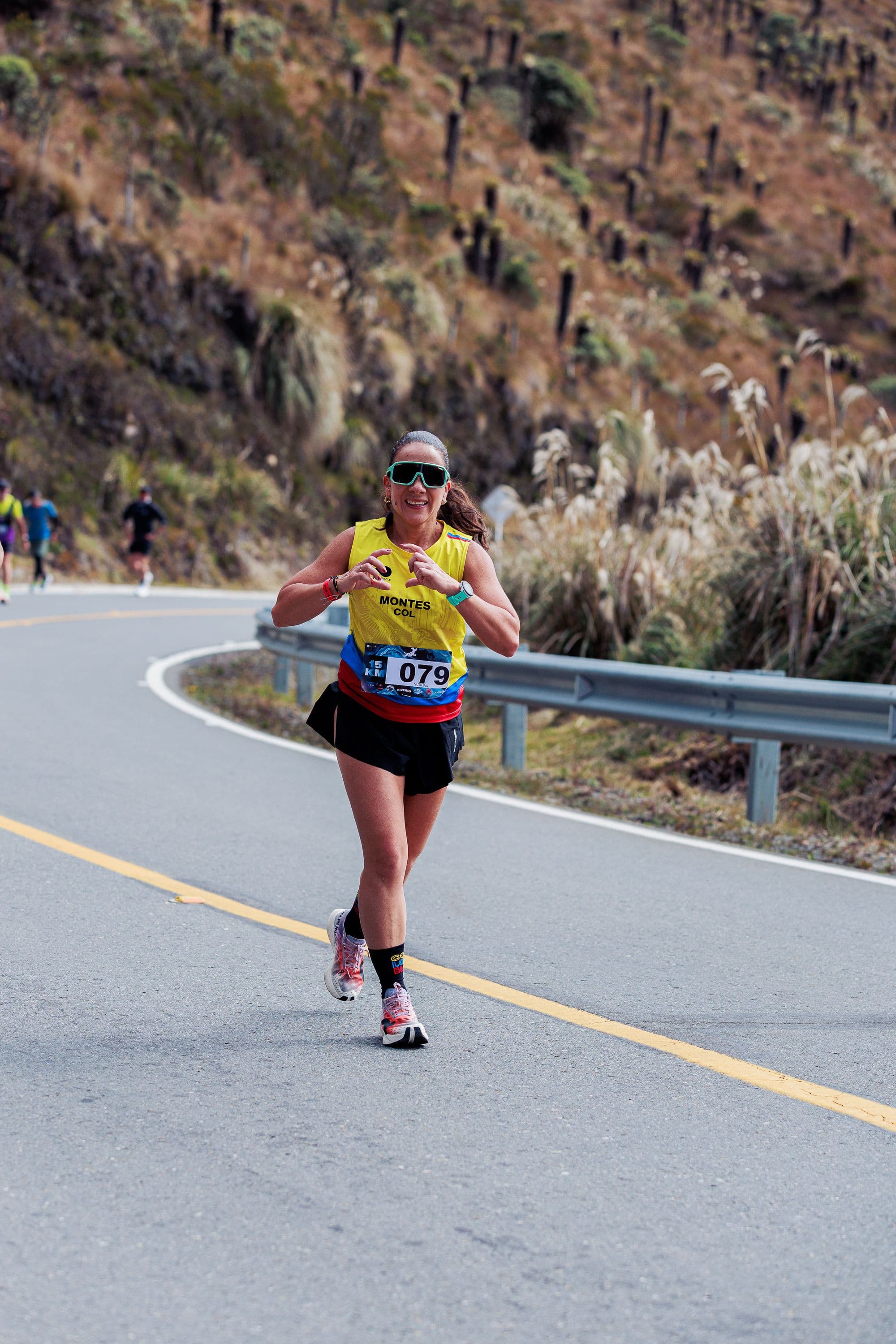
The complication arises when altitude comes packaged with elevation gain, as it usually does. High-altitude destination marathons such as Jungfrau or Kilimanjaro combine reduced oxygen with sustained climbing, and on those climbs the plate stiffness works against you.
Which High-Altitude Races Suit Super Shoes
For runners choosing international races specifically with shoe performance in mind, the useful distinction is not altitude but course profile.
Flat-to-rolling courses at altitude: Mexico City, Bogotá, Chengdu. The plate delivers, altitude aside. Expect slower times than a sea-level equivalent, but the shoe advantage holds.
Hilly courses at altitude: the carbon plate's benefit narrows significantly on sustained climbs, and on very technical mountain courses may produce a net negative. The increased stack height also reduces ground feel and proprioception, which matters on uneven or technical surfaces in ways it never does on roads.
Road courses with mild undulation at altitude: the evidence suggests the plate still helps on short rollers, where the duration of any single climb is short enough that the biomechanical mismatch does not dominate. The altitude effect on your lungs remains, but the shoe is still doing its job over the course of the race.
The Practical Upshot
For most major international marathons, including the Majors circuits and most large city races, super shoes are the right choice regardless of altitude. Tokyo (effectively sea level), Sydney (sea level), Boston (net downhill, minimal altitude), Berlin, London, Chicago, New York: all are flat to rolling at low elevation, and the plate delivers.
For mountain destination races or courses with sustained significant climbing, the research now suggests caution. A carbon plate shoe on a 1,500m+ uphill section is likely worse than a well-cushioned, flexible trainer on the same terrain, not because of altitude, but because of the climb itself.
The altitude question is really a terrain question. The technology works where it was designed to work. The race courses where it struggles tend to be high-altitude destination races where the climbs are the point. Know which one you are running before you assume the shoes will deliver.
Related reading: For the foundational case for super shoes on flat courses, Super Shoes Are Rewriting the Marathon Record Book covers the original research and its practical implications. The Berlin Marathon and Rotterdam Marathon are the two clearest examples of the flat, fast courses where the technology was designed to perform. For destination marathons in mountain or high-altitude settings, the race pages include course profile data and elevation charts.
The Extra Mile
The key research is Kobayashi et al.'s 2026 Frontiers meta-analysis on carbon-plated shoes across 14 crossover studies, and the Salomon-funded lab study on carbon-plate performance on uphill terrain published the same year. Both are open access. For the altitude and aerobic physiology side, the work of Stray-Gundersen and Levine on altitude training and race performance provides the scientific framework for understanding what altitude actually does to running economy at race effort.
The information in this article is for educational purposes only and does not constitute medical or training advice. Runners with concerns about altitude acclimatisation, altitude-related health risks, or footwear-related injury should consult a qualified healthcare professional or sports physiotherapist before racing at altitude.