The Short Cut
- Modern super shoes improve running economy by around 4%, translating to a 2 to 3% performance gain over marathon distance.
- Every world record at distances from 5km to the marathon has been broken since this technology arrived.
- The biggest gains go to well-trained athletes at high speeds, but recreational runners also see measurable improvement.
- Injury risk is real but manageable. Gradual introduction, keeping super shoes for race day and key workouts, reduces the risk considerably.
The Science Behind the Stack
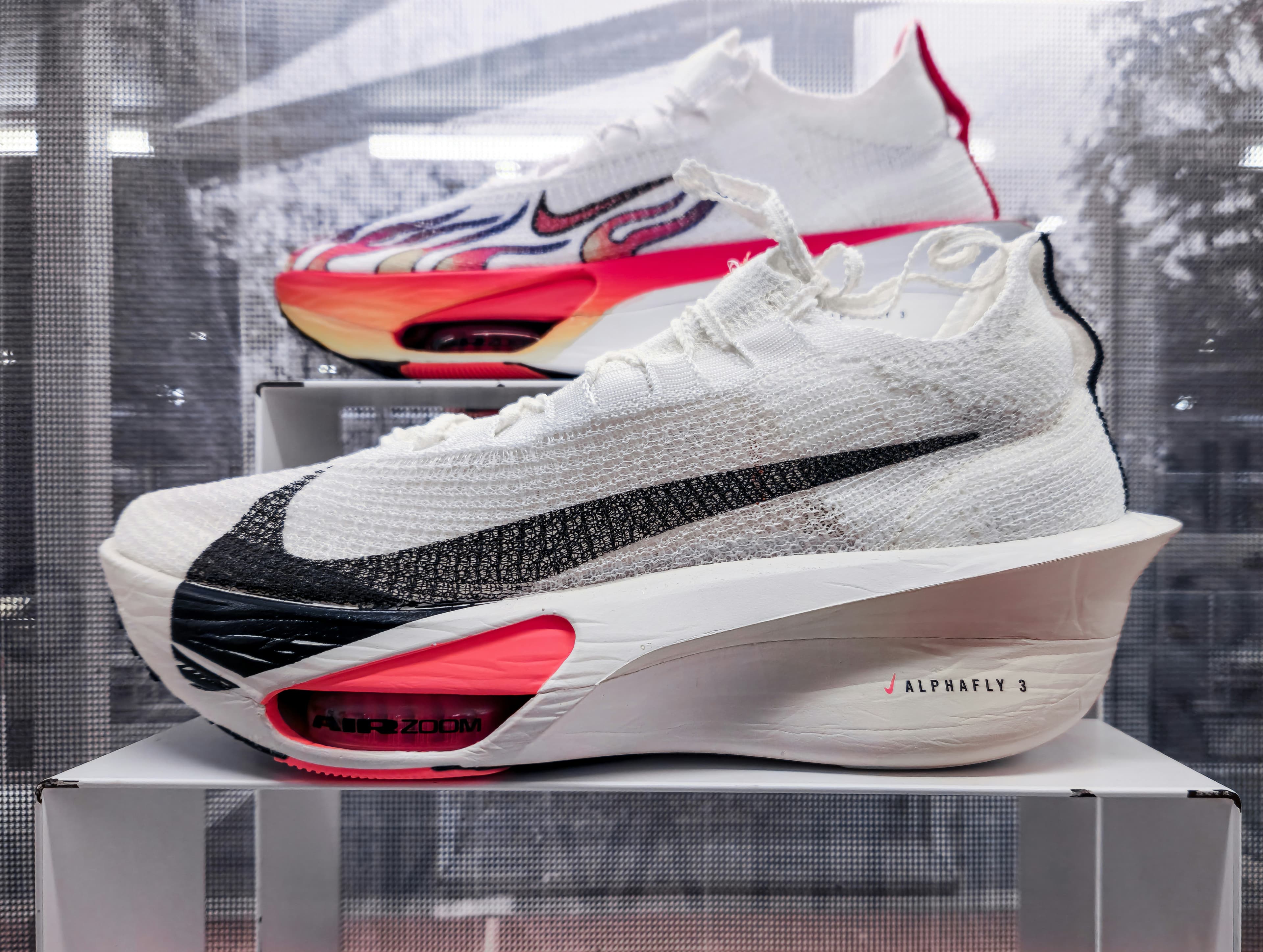
Super shoes are built around three core elements: a carbon-fibre plate, high-energy-return foam, and a curved rocker geometry. Each does something specific.
The carbon plate stiffens the shoe, reducing the degree to which the toes bend during push-off and conserving energy that would otherwise be spent on that movement. The foam, currently returning around 87% of stored energy, up from roughly 75% in previous racing shoes, means the calf stores and releases energy more efficiently, and the lower leg muscles do less work over a long effort. The curved rocker geometry creates what researchers describe as a teeter-totter effect: it improves rebound and forward propulsion with each stride. The combined stack height effectively lengthens the lever arm of the leg, improving biomechanical efficiency in ways that compound over 42.2 kilometres.
The original Nike Vaporfly 4% improved the running economy of highly trained runners by approximately 4% compared to a standard marathon shoe. In practice, that translates to a performance improvement of around 2 to 3% over race distance.
What the Records Show
Since 2016, when the Vaporfly was introduced to road racing, and 2019 when super spikes arrived on the track, effectively every world record from 5km to the marathon has been broken by athletes wearing one or the other. At the 2016 Olympics, all three male marathon medallists climbed the podium in the same Nike prototype that would later become the Vaporfly. The technology is now universal at the elite level.
In the years since the Vaporfly's introduction, the times of the top 50 male marathon runners improved by approximately 2% on average. For the top 50 female runners, the improvement was closer to 2.6%. Those are large gains in a sport where hundredths of a second matter at the front of the field.
Every major manufacturer now produces a carbon-plate racing shoe: Nike's Vaporfly and Alphafly, Adidas's Adizero Adios Pro series, Saucony's Endorphin Pro and Racer, New Balance's FuelCell SuperComp Elite, ASICS's Metaspeed Sky and Edge, On's Cloudboom Echo, and Hoka's Rocket X among them.
Who Benefits
The biggest gains go to well-trained athletes running at high speeds, where the combination of plate stiffness and foam energy return is most effective. But recreational runners benefit too. A 2017 study by Hoogkamer and colleagues found super shoes outperformed traditional racing flats by approximately 4% across all ability levels. More recent research on recreational runners found oxygen consumption roughly 3.9% lower at moderate intensity, rising to 5% at higher efforts, and the economy advantage persisted across a full 90-minute test even as fatigue accumulated. The edge narrowed slightly but did not disappear.
The Injury Question
The features that make super shoes fast also make them demanding. The stiff carbon plate limits foot mobility and increases stress on the midfoot and metatarsals, which are common injury sites. Early reports of runners developing foot stress after switching to super shoes prompted serious research attention.
The evidence so far is mixed. A US study found that runners training for a half marathon in super shoes were about half as likely to sustain injuries compared to those in traditional footwear. A Swedish study over nine months found no significant difference in injury rates. The honest answer is that individual response varies and the research is not settled.
The practical guidance is consistent: super shoes reward a gradual introduction. Switching suddenly for daily training runs, particularly at high mileage, loads the foot differently and increases risk. Saving them for race day and key workouts, and allowing the body to adapt incrementally, gives you the performance upside without piling on the injury risk all at once.
The Race-Day Reality
In races, super shoes are now universal on major podiums. Lab testing confirms that carbon-plate shoes maintain their advantage over daily trainers even under fatigue, with the performance differential staying roughly constant over 90 minutes, though both shoe types slow as tiredness sets in.
The question is no longer whether super shoes work. They do, and the evidence is overwhelming. The question is how to use them to get faster without paying for it later. That means using them strategically, introducing them gradually, and understanding that the benefit is real but not unconditional.
Related reading: The courses where super shoes deliver most are flat and fast. The Berlin Marathon, where every men's world record since 2013 has been set, and the Valencia Marathon and Rotterdam Marathon are among the best environments for the technology. For the picture at altitude and on hilly terrain, Super Shoes at Altitude: Does the Technology Still Work? covers what the research says about the limits of the carbon plate advantage. On how the shoe has crossed from performance into everyday culture, Running Has Become a Fashion Statement covers the brand story.
The Extra Mile
The most comprehensive recent overview is the Frontiers in Physiology bibliometric analysis (2024), which covers shoe technology as one of the central research themes in modern marathon performance. For the original data on the 4% economy improvement, Hoogkamer et al. (2018) in Sports Medicine remains the foundational reference. Running USA's finish-time analysis is the best source for how performance gains at the elite level compare to what is happening across the mass field.
The information in this article is for educational purposes only and does not constitute medical or training advice. Runners with concerns about injury risk from footwear changes should consult a qualified physiotherapist or sports medicine practitioner before altering their training footwear.